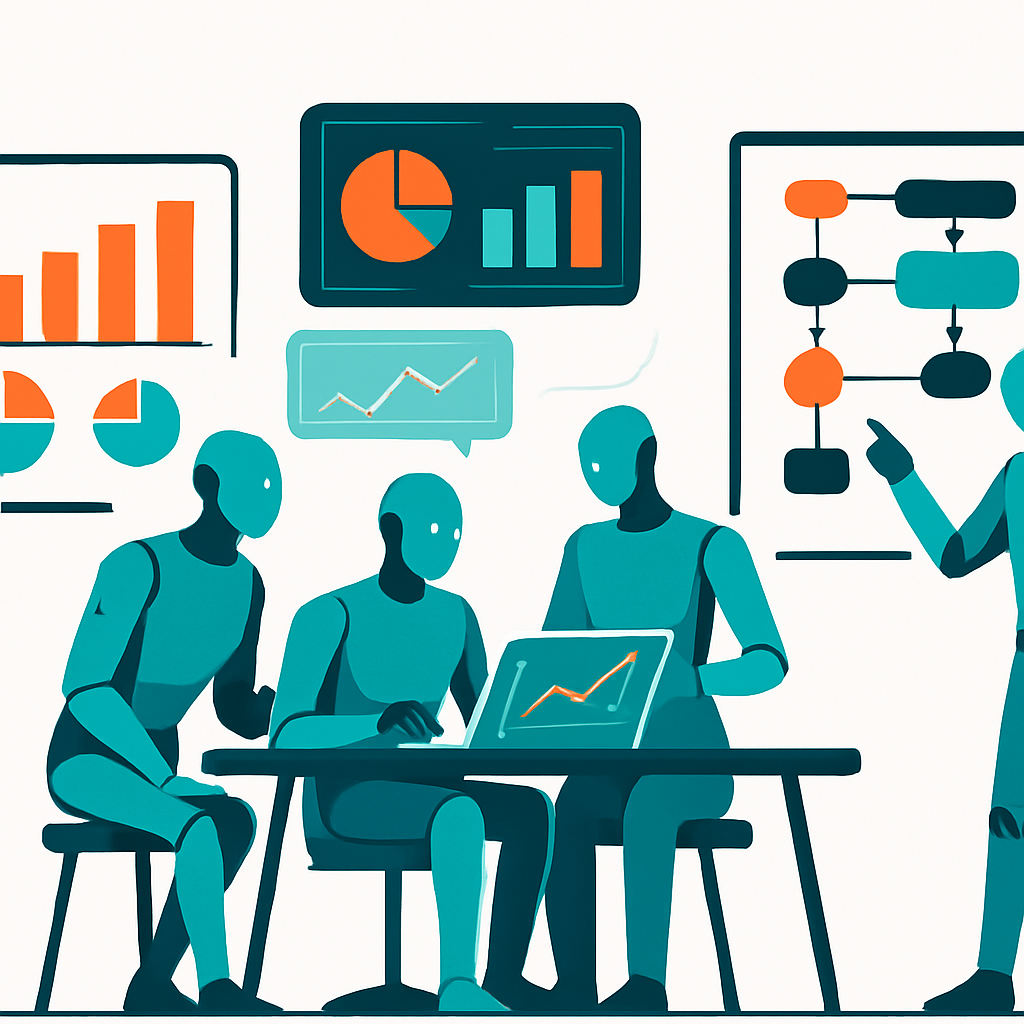

If you’re a business leader, chances are you spend a lot of time bouncing between big picture ideas and the day-to-day work of making them real. Maybe you’re mapping out a new product launch, rethinking your sales strategy, or trying to align a marketing campaign with shifting customer expectations. In each case the hardest part is often not the brainstorming itself but moving those ideas forward with confidence and clarity. That is exactly where virtual AI teams step in to support you.
Unlike automation tools that simply run tasks, virtual AI teams work alongside you as thinking partners. They help leaders like you explore ideas, challenge assumptions, and shape a clear plan of action. Imagine having a strategic partner available on demand, one that can research, analyze, and brainstorm with you while always showing you how it arrived at its insights. That is the power of virtual AI teams.
Turning scattered thoughts into structured ideas
Every leader has been there. You gather your thoughts in a meeting or jot them down during a quiet moment, only to feel stuck when it’s time to connect the dots. Virtual AI teams help you capture those early ideas and shape them into structured possibilities. Instead of a blank page, you get a working outline that maps out directions you can pursue. The experience feels less like working with a rigid machine and more like brainstorming with colleagues who listen and offer perspective.
Transparent collaboration that builds trust
One of the biggest frustrations leaders often voice about AI is the lack of visibility. They want to know how insights are generated, not just see the end result. Virtual AI teams address this by showing you every step of the reasoning process. You can watch as the AI agents debate, refine, and adjust their thinking, much like a human team would. This transparency gives you confidence that the output is not just random but based on clear logic you can follow.
Strategy support across departments
Leaders rarely face challenges that fit neatly into one box. A marketing decision may have HR implications, and a sales plan often affects operations. Virtual AI teams are flexible, which means you can build one to match the departments or roles you need. A CMO might lean on an AI team for campaign planning while a CEO could build a team that blends strategy, finance, and HR insights. Because these teams are adaptable you don’t need to hire additional staff or wait for new consultants to ramp up.
Moving from planning to execution
Ideas only matter when they turn into action. Many leaders struggle to bridge that gap because they get pulled in different directions or lack a clear starting point. Virtual AI teams help by breaking down complex strategies into manageable steps. They don’t just provide a high-level plan. They map out priorities, highlight risks, and suggest realistic timelines so you can guide your human teams with clarity. Instead of juggling endless meetings to align everyone, you return to your AI team for instant support whenever you need it.
Always ready when you are
Another common challenge leaders face is timing. Projects don’t always move in a straight line and sometimes you need to revisit a plan after weeks or even months. Virtual AI teams remain available and adaptable. They don’t disappear once the first plan is drafted. Instead they continue to evolve with you, picking up where you left off and helping you reframe your strategy as conditions change. This sense of continuity is invaluable for leaders who manage shifting priorities.
Why leaders are embracing virtual AI teams now
The shift to hybrid and remote work has changed the way leaders think about collaboration. Many feel stretched thin, struggling to balance big decisions with everyday operations. Virtual AI teams provide relief by handling the heavy lifting in research, planning, and brainstorming. They give leaders space to think, while also offering the reassurance of structured, transparent input. Whether you are a startup founder trying to validate an idea or an executive leading multiple departments, these AI partners help you stay focused on what matters most.
Common questions leaders ask
It is natural to wonder whether virtual AI teams can truly add value beyond traditional tools or consultants. The most common concerns include:
- Will I lose control over the decision-making process? With transparent AI collaboration you remain in control and can see exactly how ideas are developed.
- Is this just another form of automation? No. Virtual AI teams focus on strategic thinking, not routine task execution. They support leaders in the planning and decision phase rather than replacing human work.
- Can this adapt to my specific needs? Absolutely. Whether you need a marketing strategist, HR advisor, or project planning support, you can tailor your AI team roles to match your unique challenges.
Taking the next step
At the end of the day, leadership is about making thoughtful decisions and guiding teams toward meaningful results. The pressure to get it right can feel overwhelming. Virtual AI teams give you the clarity and confidence you need by turning your brainstorms into structured strategies and helping you stay on course through execution. They are not here to replace human collaboration but to enhance it, giving you an on-demand partner whenever you need support.
If you have been looking for a way to think more clearly, plan more effectively, and make faster decisions without adding to your headcount, it may be time to see what a virtual AI team can do for you. BreezeMinds makes it easy to build your own AI team tailored to your business. Sign up for free today and experience the difference of having a thinking partner ready whenever you are.