

Meet BreezeMinds
Build Your Perfect AI Team of Marketing for Your Real Estate BrokerageRecruitment for Your IT CompanyBrand designing for Your Boutique ShopLegal Advisors for your Financial StartupProject Management for a Construction Firm
BreezeMinds adapts to your needs, creating custom AI-powered teams that work seamlessly, no matter your industry or business size.
How does BreezeMinds work?
Create Your Virtual Team with Ease
Simply tell BreezeMinds the roles you need, and it will build a virtual team tailored to your business requirements. Whether it’s customer support, sales, or project management, BreezeMinds assembles the team you need, exactly when you need it.
01
Assign Tasks and Watch Your Team Collaborate Transparently
Once your team is set up, you can assign tasks as needed. BreezeMinds’ agents work together, discussing options and collaborating in real time, just like a human team. Every interaction and decision is visible to you, ensuring full transparency throughout the process so you always understand how solutions are reached.
02
Return Anytime to Keep Your Team Active
Your BreezeMinds team is always there when you need it. Simply revisit the team to assign more tasks, adjust roles, or watch your virtual agents continue their work seamlessly. BreezeMinds’ adaptable team structure ensures ongoing support for your evolving needs.
03

How BreezeMinds is Different from a Multi-Agent Solution

Unified, Purpose-Built Team Dynamics
While multi-agent solutions typically involve multiple agents that work independently on individual tasks, BreezeMinds focuses on creating a cohesive, virtual AI team. Each agent in BreezeMinds collaborates with others, discussing and evaluating options in real-time to reach a collective decision. This dynamic mimics human team interactions, where brainstorming and communication drive better results, especially for complex tasks.

No Repetitive Configurations or Prompt Instructions
Unlike traditional multi-agent solutions, where each new role or task requires creating dedicated agents with specific prompts and instructions, BreezeMinds offers a flexible, on-demand team structure. With BreezeMinds, you can instantly reconfigure your team roles without the need to build new agents from scratch or re-enter instructions. BreezeMinds adapts roles dynamically, creating a virtual team that aligns with your needs every time, minimizing setup and maximizing efficiency.

Full Transparency and Insightful Decision-Making
Unlike typical multi-agent systems where interactions might happen in the background or be inaccessible, BreezeMinds makes all team discussions and decisions visible to the user. This transparency allows users to understand how their virtual team is arriving at solutions, offering insights into decision-making that can be fine-tuned or monitored as needed.
Use Cases


 Ethan Rodriguez (Lead Marketing Director):
Hello and welcome! I'm Ethan Rodriguez, the Lead Marketing Director for our Fantasy Cricket App. I'm thrilled to meet you and excited to help drive the success of our platform where cricket fans can create their dream teams and win prizes based on real match performances.
I'd like to introduce you to our exceptional marketing team who will be working together to grow our user base, increase engagement, and maximize revenue through strategic campaigns.
Let me introduce each team member, and then they'll share a bit about themselves and their expertise.
Vikram Patel (User Acquisition Specialist):
Greetings! I'm Vikram Patel, your User Acquisition Specialist. With my background in performance marketing for mobile gaming apps, I specialize in bringing new cricket enthusiasts to our platform through targeted digital campaigns.
My expertise lies in optimizing acquisition costs across various channels, implementing effective ASO strategies, and scaling our user base, particularly during major cricket tournaments. I closely track metrics like CPI, ROAS, and conversion rates to ensure we're growing efficiently and attracting quality users who will engage with our fantasy cricket experience.
I look forward to developing acquisition strategies that will help us stand out in the competitive fantasy sports landscape!
 Priya Sharma (Content Marketing Strategist):
Hello there! I'm Priya Sharma, your Content Marketing Strategist. I'm passionate about creating engaging content that connects with cricket fans and enhances their fantasy gaming experience.
My role involves developing compelling content across multiple formats – from match previews and player analysis to tutorial videos and social media campaigns. I ensure our content aligns perfectly with the cricket calendar, highlighting key tournaments and player performances to keep our users informed and engaged.
I'm excited to craft stories that not only educate users about fantasy cricket strategies but also build a vibrant community around our app!
 James Wilson (User Retention and Engagement Manager):
Hi there! I'm James Wilson, your User Retention and Engagement Manager. My focus is on keeping our users active and excited about our fantasy cricket app long after they've downloaded it.
I specialize in analyzing user behavior patterns to develop personalized engagement strategies, optimizing push notifications, implementing effective gamification elements, and creating loyalty programs that reward our most dedicated users. By understanding the cricket calendar, I can plan seasonal campaigns that maximize engagement during key tournaments.
My goal is to reduce churn, increase session frequency, and ultimately maximize the lifetime value of every user who joins our platform!
 Ananya Desai (Cricket Analytics and Insights Specialist):
Greetings! I'm Ananya Desai, your Cricket Analytics and Insights Specialist. I transform complex cricket data and statistics into actionable insights that power both our marketing strategies and app features.
My expertise includes analyzing player performance metrics, predicting trends, and developing data-driven content that enhances our app's credibility. I work closely with the team to ensure our fantasy point systems accurately reflect real-world cricket performance, helping users make informed decisions when creating their teams.
I'm excited to leverage cricket analytics to create compelling features and campaigns that set our fantasy app apart from competitors!
Ethan Rodriguez (Lead Marketing Director):
Now that you've met our talented team, we're ready to help you market and grow your fantasy cricket app! We understand the unique challenges and opportunities in this space, and we're equipped with the expertise to drive user acquisition, engagement, and retention through strategic, data-driven marketing initiatives.
What specific aspects of marketing your fantasy cricket app would you like us to focus on first? Whether it's user acquisition strategies, content planning for upcoming tournaments, retention campaigns, or analytics insights, we're here to provide our expertise!
Ethan Rodriguez (Lead Marketing Director):
Thank you for sharing your immediate need! Launching a new fantasy cricket app with a multi-channel ad campaign across TV, Radio, and Billboard is an excellent approach to create maximum impact. Our team will develop a comprehensive campaign strategy that maintains consistent messaging while optimizing for each medium's unique strengths.
Let me coordinate with the team to develop this campaign. Each specialist will contribute their expertise to ensure we create something truly compelling that drives downloads and engagement.
Vikram Patel (User Acquisition Specialist):
This is an exciting opportunity to make a strong market entry! From an acquisition perspective, I recommend we focus on clear call-to-actions and app store positioning across all three media channels.
For our target audience segmentation, we should consider both hardcore cricket fans and casual viewers who become more engaged during major tournaments. We'll need to emphasize the app's unique value proposition and ensure download instructions are crystal clear, especially on billboards where viewing time is limited.
I'll work on developing compelling CTAs and ensure our app store optimization aligns perfectly with the campaign messaging.
Priya Sharma (Content Marketing Strategist):
I'm thrilled to work on this campaign! For effective messaging across TV, radio, and billboards, we need a powerful, memorable tagline and consistent storytelling that resonates with cricket fans.
I suggest we develop a campaign theme that taps into the emotional connection fans have with cricket while highlighting the fantasy element that puts them in control. We could explore concepts around "becoming the selector" or "proving your cricket knowledge" that appeal to fans' desire to demonstrate their expertise.
I'll draft compelling scripts and taglines that maintain our brand voice across all three channels while adapting to each medium's unique requirements.
James Wilson (User Retention and Engagement Manager):
While this campaign focuses on acquisition, we should also plant seeds for long-term engagement. I recommend we highlight features that keep users coming back - like tournaments, leaderboards, and rewards.
For the campaign, we should showcase not just the thrill of selection but also the ongoing excitement of watching your chosen players perform. This creates an emotional hook that extends beyond the initial download.
I'll help ensure our messaging emphasizes the continuous engagement aspects of the app, setting expectations for an ongoing relationship rather than a one-time experience.
Ananya Desai (Cricket Analytics and Insights Specialist):
From an analytics perspective, I recommend we highlight how our app uses real cricket data and statistics to create an authentic fantasy experience. We should emphasize any unique scoring systems or predictive features that differentiate us from competitors.
For the campaign, we could showcase specific cricket insights or statistics that demonstrate our deep understanding of the game. This builds credibility with knowledgeable fans while educating newer fans about the depth of our platform.
I'll provide data-driven insights to ensure our campaign messaging is authentic and resonates with cricket enthusiasts of all levels.
Ethan Rodriguez (Lead Marketing Director):
Based on everyone's input, I'll now present our comprehensive ad campaign strategy for your fantasy cricket app launch across TV, Radio, and Billboard platforms.
Fantasy Cricket App Launch Campaign: "Captain Your Cricket Destiny"
Campaign Overview:
Our integrated campaign positions your fantasy cricket app as the ultimate platform for fans to demonstrate their cricket knowledge and passion. The campaign emphasizes user empowerment, authentic cricket experience, and the thrill of winning based on real match performances.
Core Tagline:
"Captain Your Cricket Destiny"
Supporting Taglines:
- "Your Team, Your Strategy, Real Rewards"
- "The Selector's Seat Is Yours"
- "Play Smart, Win Big"
- "Where Cricket Knowledge Pays Off"
- "Every Selection Matters, Every Match Counts"
TV Ad Concept (30 seconds):
VISUAL: Fast-paced montage of cricket action interspersed with close-ups of fans intensely watching matches on their phones.
SCENE 1: A cricket fan watching a match looks frustrated as a player gets out. VO: "Tired of shouting advice at your screen?"
SCENE 2: The fan opens the fantasy cricket app, thoughtfully selecting players. VO: "What if your cricket knowledge could actually pay off?"
SCENE 3: Split screen showing real match action and the same players in the app accumulating points. VO: "Introducing [App Name] – where you captain your cricket destiny."
SCENE 4: The fan celebrates as points accumulate, showing the app interface with rewards being unlocked. VO: "Select real players, watch them perform, win real rewards."
SCENE 5: Multiple diverse users engaging with the app in different settings – at home, commuting, with friends. VO: "Join thousands of cricket fans proving their expertise every match day."
FINAL SHOT: App logo with download information. VO: "Download [App Name] now. Captain Your Cricket Destiny."
Radio Ad Script (30 seconds):
SFX: Cricket crowd roar, bat hitting ball ANNOUNCER 1: "What a selection! That's another boundary!"
VOICE 1: "If only the selectors listened to me, we'd never lose."
VOICE 2: "Why just talk about it? Prove your cricket knowledge with [App Name]."
SFX: App notification sound VOICE 2: "Select real players, create your dream team, and win real rewards based on actual match performance."
VOICE 1: "So my cricket knowledge finally pays off?"
VOICE 2: "Absolutely! Join thousands of fans who are captaining their cricket destiny."
ANNOUNCER: "Download [App Name] now from your app store. [App Name] – Your Team, Your Strategy, Real Rewards. Terms and conditions apply."
Billboard Concept:
Design: Split billboard showing:
- Left side: A cricket stadium with players in action
- Right side: A smartphone displaying the app interface with a fantasy team and points accumulating
Headline: "CAPTAIN YOUR CRICKET DESTINY"
Subtext: "Select Players. Watch Matches. Win Rewards."
Call-to-Action: "Download Now" with app store logos and QR code
Visual Elements:
- Cricket ball graphic element connecting the two sides
- Trophy icon near the "Win Rewards" text
- Bright, vibrant colors matching app branding
Implementation Strategy:
-
Timing: Launch campaign 2-3 weeks before a major cricket tournament for maximum impact
-
Geographic Targeting:
- Billboards in cricket-loving metropolitan areas with high traffic
- TV ads during pre-match and post-match shows
- Radio spots during morning commute and sports programs
-
Measurement:
- Track installs using unique campaign codes
- Monitor website traffic spikes during ad airings
- Analyze user acquisition costs across channels
-
Integration:
- QR codes on billboards linking directly to app stores
- Social media extensions of the campaign with shareable content
- Influencer partnerships with cricket commentators or former players
Budget Allocation Recommendation:
- TV: 50% (highest reach and impact)
- Billboards: 30% (strategic locations in cricket-loving cities)
- Radio: 20% (targeted programs with cricket fan audiences)
This campaign creates a cohesive narrative across all three channels while optimizing for each medium's strengths. The messaging emphasizes user empowerment, real cricket knowledge, and tangible rewards – all key motivators for our target audience.
Would you like us to elaborate on any specific aspect of this campaign, or would you like to see alternative creative approaches?
Multi-Channel Ad Campaign for a Fantasy Cricket App Launch
Challenge:
A new fantasy cricket app needs to build brand awareness and attract users in a competitive market. The challenge is to create an engaging ad campaign that effectively reaches cricket enthusiasts through TV, radio, and billboards while standing out from established competitors.
Solution:
BreezeMinds’ AI-powered marketing team could develop a high-impact ad campaign tailored for each platform. The team would craft compelling TV commercials with engaging visuals, radio ads with strong storytelling, and eye-catching billboards positioned in high-traffic areas. By leveraging cricket analytics, audience insights, and a strategic launch timeline around major tournaments, the campaign would maximize reach, engagement, and user acquisition.
Recruitment Team: Screening Candidate Resumes and Shortlisting Top 3 Matches
Challenge:
A cosmetic brand needs a Full Stack Developer to enhance its e-commerce platform, but the hiring process is slow and requires extensive resume screening, technical assessments, and coordination between HR and IT. Finding the right candidate with both technical expertise and industry-specific knowledge is a challenge.
Solution:
With BreezeMinds, the company could create an AI-powered hiring team to streamline recruitment. Specialists in talent acquisition, technical assessment, UX/UI, and e-commerce would collaboratively screen resumes, evaluate skills, and shortlist top candidates—ensuring a faster, more efficient, and transparent hiring process.
Now I'll introduce the recruitment team to you:
 Sophia Chen (Chief Talent Acquisition Officer):
Hello and welcome! I'm Sophia Chen, Chief Talent Acquisition Officer for our leading cosmetic brand. I'm delighted to introduce our specialized recruitment team assembled to find an exceptional Full Stack Developer for our IT department. Our ideal candidate will help manage and enhance our e-commerce platform, company website, and related applications.
Our team brings together diverse expertise in technical assessment, user experience, and e-commerce platform knowledge to ensure we find the perfect match for our organization. I'll be coordinating our recruitment efforts and serving as your primary point of contact throughout this process. Let me introduce you to our talented team members.
 Marcus Johnson (Technical Assessment Specialist):
Greetings! I'm Marcus Johnson, your Technical Assessment Specialist. My focus is evaluating candidates' coding proficiency, API integration knowledge, and technical problem-solving abilities. I'll be conducting code reviews, technical interviews, and practical assessments to ensure candidates have the full stack development skills needed for our beauty e-commerce platform. I'm particularly interested in seeing how developers approach challenges related to product catalog management, checkout processes, and third-party integrations.
 Aisha Patel (UX/UI Recruitment Specialist):
Hello there! I'm Aisha Patel, UX/UI Recruitment Specialist for our team. I'll be evaluating candidates' understanding of user experience design principles, especially as they relate to beauty product presentation and consumer behavior. I'm passionate about finding developers who not only code well but also understand how to create intuitive, visually appealing interfaces that showcase our products effectively. I'll be looking at candidates' portfolio work and assessing their knowledge of responsive design, accessibility, and beauty industry UI/UX best practices.
 Rafael Moreno (E-commerce Platform Specialist):
¡Hola! I'm Rafael Moreno, E-commerce Platform Specialist on our recruitment team. My role involves assessing candidates' understanding of beauty e-commerce platforms, technical requirements, and industry trends. I'll evaluate their ability to develop scalable solutions, optimize performance, and implement effective integrations. I'm particularly interested in candidates who understand the unique challenges of beauty e-commerce, such as product visualization, personalization features, and inventory management. I look forward to finding a developer who can help take our online presence to the next level!
Sophia Chen (Chief Talent Acquisition Officer):
Now that you've met our team, we're ready to assist with your Full Stack Developer recruitment needs. How would you like to proceed with the hiring process? Would you like us to start by creating a comprehensive job description, discussing the technical requirements in more detail, or outlining our recommended recruitment timeline?
Here is a job description.
Job Description: Full Stack Web Developer
Position: Full Stack Web Developer Company: [XYZ Company] Location: [Location] Employment Type: Full-time
About the Role
We are seeking a talented and motivated Full Stack Web Developer to join our IT team, responsible for managing and enhancing our e-commerce platform, company website, and related applications. The ideal candidate will work closely with designers, marketers, and backend engineers to ensure seamless functionality and an exceptional user experience across all digital assets.
Key Responsibilities:
Develop, maintain, and optimize web applications, e-commerce platforms, and internal tools.
Collaborate with designers and product managers to implement responsive UI/UX designs.
Build RESTful APIs and integrate third-party services.
Ensure performance, security, and scalability of applications.
Work on both frontend and backend technologies, implementing best coding practices.
Troubleshoot and debug technical issues.
Stay updated with industry trends and emerging technologies.
Requirements:
Bachelor’s degree in Computer Science, Engineering, or a related field.
Proven experience as a Full Stack Developer, preferably in an e-commerce environment.
Proficiency in JavaScript, HTML, CSS, and frameworks like React, Angular, or Vue.js.
Strong backend development skills in Node.js, Python, or PHP with database experience (MySQL, PostgreSQL, MongoDB).
Familiarity with cloud platforms (AWS, Azure, GCP) and CI/CD workflows.
Strong problem-solving skills and ability to work in a fast-paced environment.
Excellent communication and teamwork skills.
Here are applicant resumes.
here is the file :Daniel Martinez-MEARN-Stack.pdf https://dricus.ocuss.app/media/Daniel_Martinez_MEARN_Stack.pdf
here is the file :Emily Carter.pdf https://dricus.ocuss.app/media/Emily_Carter.pdf
here is the file :Resume John Smith.pdf https://dricus.ocuss.app/media/Resume_John_Smith.pdf
here is the file :Sarah Lee-Resume.pdf https://dricus.ocuss.app/media/Sarah_Lee_Resume.pdf
here is the file :CV-Michael Johnson.pdf https://dricus.ocuss.app/media/CV_Michael_Johnson.pdf
We need to screen incoming resumes to identify the most suitable candidates for the next round of interviews. The ideal candidate should have expertise in front-end and back-end development, experience with e-commerce platforms, and a strong understanding of scalability, performance optimization, and security best practices. Please review the resumes and shortlist candidates based on relevant skills, work experience, and alignment with our business needs.
Sophia Chen (Chief Talent Acquisition Officer):
Thank you for providing the job description and candidate resumes. Our recruitment team has thoroughly reviewed all five candidates for the Full Stack Web Developer position. We've analyzed each resume against the key requirements: front-end and back-end development expertise, e-commerce platform experience, and knowledge of scalability, performance optimization, and security best practices.
I'll now ask each team member to provide their expert assessment from their specialized perspective, after which I'll share our final recommendations for shortlisting.
Marcus Johnson (Technical Assessment Specialist):
After reviewing the technical qualifications of all candidates, I've assessed their coding proficiency and technical skill alignment with the position requirements:
Daniel Martinez (MERN Stack Developer):
- Strong JavaScript-based full stack skills with the MERN stack
- Good experience with modern front-end technologies (React.js, Redux)
- Relevant experience with serverless functions and AWS
- Currently works in the beauty industry, showing domain familiarity
- Technical assessment: 8/10 - Strong JavaScript foundation but limited evidence of large-scale application development
Emily Carter (Python & Django Specialist):
- Extensive backend experience with Python and Django
- Good front-end skills with Vue.js
- Strong in data-driven applications and API development
- Currently works in cosmetics with AI implementation experience
- Technical assessment: 7.5/10 - Excellent backend skills but JavaScript framework experience is limited to Vue.js
John Smith (React + Node.js Expert):
- Comprehensive JavaScript ecosystem knowledge
- Experience with both SQL and NoSQL databases
- Strong DevOps skills with Docker, Kubernetes, and AWS Lambda
- Direct e-commerce platform development experience
- Technical assessment: 9/10 - Excellent technical breadth and depth with proven e-commerce implementation
Sarah Lee (Java & Spring Boot Developer):
- Strong enterprise-level development experience
- Good with microservices architecture
- Solid DevOps knowledge with AWS and Kubernetes
- Experience with Angular for front-end development
- Technical assessment: 8/10 - Excellent for enterprise-scale applications but tech stack differs from JavaScript-focused environments
Michael Johnson (PHP & Laravel Developer):
- Extensive e-commerce development experience
- Strong with payment gateway integrations
- Experience handling high-volume transactions
- Good with caching strategies for performance
- Technical assessment: 8/10 - Excellent e-commerce experience but PHP/Laravel may not align with modern JavaScript frameworks
Aisha Patel (UX/UI Recruitment Specialist):
I've evaluated each candidate's understanding of user experience design principles and their ability to create effective interfaces for beauty products:
Daniel Martinez:
- Experience with modern UI libraries like React.js and Tailwind CSS
- Developed a custom CMS for managing product descriptions and media
- Implemented SEO improvements, showing awareness of user discovery journeys
- UX/UI assessment: 7.5/10 - Good foundation but limited details on responsive design implementation
Emily Carter:
- Experience with Vue.js and Nuxt.js for front-end development
- Developed an internal analytics dashboard, showing data visualization skills
- Worked on customer recommendation systems, indicating understanding of user personalization
- UX/UI assessment: 7/10 - Strong in data visualization but less evidence of consumer-facing interface design
John Smith:
- Strong experience with React.js, Next.js, and TypeScript
- Improved page load speed by 40%, showing focus on user experience
- Implemented recommendation engines to enhance user product discovery
- UX/UI assessment: 9/10 - Excellent understanding of performance optimization and user-centered design
Sarah Lee:
- Experience with Angular and Material UI
- Developed loyalty program modules, showing understanding of user engagement
- UX/UI assessment: 7/10 - Solid framework knowledge but limited details on beauty-specific interface design
Michael Johnson:
- Experience with Bootstrap and jQuery for front-end development
- Built multi-vendor platforms requiring complex user interfaces
- Integrated multiple payment systems, showing checkout flow expertise
- UX/UI assessment: 8/10 - Strong e-commerce UX experience with focus on transaction flows
Rafael Moreno (E-commerce Platform Specialist):
I've analyzed each candidate's experience with e-commerce platforms, technical requirements, and industry trends:
Daniel Martinez:
- Currently working at a beauty products company
- Built an AI-powered chatbot for customer queries
- Developed a custom CMS for product management
- E-commerce assessment: 7.5/10 - Good beauty industry experience but limited details on core e-commerce functionality
Emily Carter:
- Working at a cosmetics company with AI recommendation systems
- Improved API response time significantly
- Developed analytics dashboards for tracking customer behavior
- E-commerce assessment: 8/10 - Strong in data-driven e-commerce with beauty industry experience
John Smith:
- Direct experience developing headless e-commerce platforms
- Implemented microservices architecture for scalability
- Created recommendation engines that boosted sales
- E-commerce assessment: 9.5/10 - Exceptional e-commerce experience with modern architecture and proven results
Sarah Lee:
- Working at a luxury beauty company
- Developed loyalty programs increasing repeat purchases
- Optimized database queries for performance
- E-commerce assessment: 8/10 - Good beauty industry experience with focus on customer retention
Michael Johnson:
- Built a multi-vendor e-commerce platform handling 50,000+ daily transactions
- Integrated multiple payment gateways
- Automated order processing workflows
- E-commerce assessment: 9/10 - Excellent high-volume e-commerce experience but in fashion rather than beauty
Sophia Chen (Chief Talent Acquisition Officer):
After reviewing all team assessments and considering the specific requirements for our Full Stack Web Developer position, I'm pleased to provide our final recommendations:
Candidates Recommended for Shortlisting (in order of priority):
John Smith - His extensive experience with modern JavaScript frameworks, proven e-commerce platform development, and impressive performance optimization results make him our top recommendation. His experience developing a headless e-commerce platform and implementing microservices architecture directly aligns with our scalability and performance requirements.
Michael Johnson - His experience building high-volume e-commerce platforms and payment gateway integrations demonstrates his ability to handle complex e-commerce systems. While his PHP/Laravel stack differs from a JavaScript-focused environment, his proven ability to handle 50,000+ daily transactions shows excellent scalability knowledge.
Emily Carter - Her experience at a cosmetics company and work with AI-powered recommendation systems offers valuable industry-specific knowledge. Her strong backend skills and data-driven approach could be beneficial for enhancing our product recommendation capabilities.
Additional Considerations:
Daniel Martinez - While he has relevant beauty industry experience, his portfolio shows less evidence of large-scale application development compared to our top candidates.
Sarah Lee - She has excellent enterprise-level experience and works in the luxury beauty sector, but her Java/Spring Boot focus may require more adaptation to our existing technology stack.
I recommend scheduling technical interviews with our top three candidates, focusing particularly on their approach to scalability challenges and security best practices in e-commerce environments. Would you like us to proceed with arranging these interviews or would you prefer to discuss our recommendations further?
CRM Product Development Team
Sophia Chen (Product Strategy Director):
Hello! I'm Sophia Chen, Product Strategy Director for our CRM development team. I'm excited to lead this collaborative effort to create a competitive and high-demand CRM application. My role is to coordinate our team's efforts, analyze market trends, and ensure our product aligns with business objectives. I look forward to working with you on this project and delivering a CRM solution that truly meets market needs.
Sophia's Voice - Sophia's Introduction
 Maya Rodriguez (UX/UI Design Specialist):
Hi there! I'm Maya Rodriguez, the UX/UI Design Specialist on our CRM development team. I'm passionate about creating intuitive, user-friendly interfaces that make complex tasks simple. My focus is on analyzing user interactions, identifying pain points, and designing solutions that enhance the overall experience. I'll be working to ensure our CRM application is not only functional but also a pleasure to use. I'm excited to bring my design expertise to this project!
Maya's Voice - Maya's Introduction
 Ethan Patel (Software Development Lead):
Hello everyone! I'm Ethan Patel, the Software Development Lead for our CRM project. I bring extensive experience in building scalable, efficient software solutions. My role involves analyzing technical requirements, recommending optimal architecture, and ensuring our code is clean, maintainable, and scalable. I'll be working closely with the team to select the right technology stack and prevent technical debt as we build. I'm looking forward to creating a robust CRM application that meets both business and technical standards.
Ethan's Voice - Ethan's Introduction
Zoe Washington (Market Research Analyst):
Hello! I'm Zoe Washington, the Market Research Analyst for our CRM development team. My expertise lies in understanding market trends, analyzing competitor solutions, and identifying customer needs in the CRM space. I'll be monitoring the competitive landscape, processing customer feedback, and tracking industry trends to ensure our product stays ahead of the curve. My insights will help us identify gaps in the market and opportunities for innovation. I'm excited to help shape a CRM solution that truly stands out in the marketplace!
Zoe's Voice - Zoe's Introduction
 Daniel Kim (Customer Success Specialist):
Hi everyone! I'm Daniel Kim, the Customer Success Specialist on our CRM development team. My focus is on ensuring our application truly meets user needs and expectations. I'll be analyzing support tickets, predicting user adoption patterns, and developing personalized onboarding strategies to maximize satisfaction and retention. My goal is to make sure our CRM delivers real value to customers and becomes an indispensable tool in their daily operations. I'm thrilled to be part of this team and help create a CRM that users will love!
Daniel's Voice - Daniel's Introduction
Sophia Chen (Product Strategy Director):
Now that you've met our team, we're ready to collaborate on developing a competitive CRM application. Each team member brings specialized expertise to ensure our product meets market needs, delivers an exceptional user experience, and provides real business value.
How would you like us to begin? We can start by discussing your specific requirements for the CRM application, exploring market opportunities, or diving into initial design concepts. We're also happy to answer any questions you might have about our approach or expertise.
Would you like us to include voice recordings in our future communications? We're happy to continue providing audio files for a more personalized experience.
We are building a CRM for the Real Estate industry and need a comprehensive analysis to ensure market fit and differentiation. Conduct research on:
Product Requirements: Identify essential features and functionalities based on real estate industry needs.
Market Trends: Analyze demand, emerging trends, and adoption challenges for real estate CRMs.
Competitor Analysis: Study existing CRM solutions, highlighting their strengths, weaknesses, and gaps.
Risk Assessment: Evaluate potential risks, including market saturation, compliance issues, and technological challenges.
Unique Value Proposition: Generate ideas to differentiate our CRM and create a competitive edge.
Provide insights, strategic recommendations, and data-driven conclusions to shape a CRM that effectively addresses industry pain points.
Sophia Chen (Product Strategy Director):
Thank you for your request! Our team will conduct a comprehensive analysis of the real estate CRM market to ensure our product achieves optimal market fit and differentiation. We'll examine product requirements, market trends, competitor analysis, risk assessment, and develop a unique value proposition.
I'll coordinate our team's efforts to deliver actionable insights that will guide our CRM development. Let's begin!
Zoe Washington (Market Research Analyst):
I'll start by analyzing the current real estate CRM market landscape, trends, and competitor offerings. This will provide us with a solid foundation for understanding the market dynamics and identifying opportunities for differentiation.
Let me share my initial findings on market trends and growth projections:
Sophia Chen (Product Strategy Director):
Thank you, Zoe. I'll coordinate with the team to compile a comprehensive analysis based on our research. Let's dive into each aspect of the request.
Zoe Washington (Market Research Analyst):
Market Analysis for Real Estate CRM Development
Market Trends & Growth Projections
The real estate CRM market is experiencing significant growth:
- Market Size: Currently valued at $10.81 billion in 2023
- Growth Forecast: Projected to reach $17.13 billion by 2030, growing at a CAGR of 8.1%
- Alternative Forecast: Some analyses predict a higher 12.2% CAGR, reaching $11.89 billion by 2033
Key Market Drivers
- Digital Transformation: Increasing adoption of automation for lead nurturing and task management
- Mobile-First Approach: Growing demand for on-the-go access for field operations
- Data-Driven Decision Making: Rising emphasis on analytics and insights
- Compliance Requirements: Enhanced focus on data security and regulatory compliance (GDPR/CCPA)
- AI Integration: Increasing adoption of predictive analytics and AI-powered tools
Regional Insights
- North America: Leading market due to early technology adoption and competitive real estate landscape
- Asia-Pacific: Fastest-growing region driven by urbanization and property development
These trends indicate a robust market with significant growth potential, particularly for solutions that address emerging needs around mobility, AI integration, and compliance.
Ethan Patel (Software Development Lead):
Essential Features & Technical Requirements
Based on my analysis of current market offerings and technological trends, here are the essential features and technical requirements for a competitive real estate CRM:
Core Features
- Contact & Pipeline Management
- Comprehensive contact database with relationship tracking
- Visual sales pipeline with customizable stages
- Automated follow-up sequences
- Property Management
- Property listings integration with MLS synchronization
- Property matching algorithms for client preferences
- Digital property showcase capabilities
- Task & Calendar Management
- Automated task creation and reminders
- Calendar integration with major platforms (Google, Outlook)
- Team task assignment and tracking
- Document Management
- Digital contract management with e-signature integration
- Document storage and organization
- Template library for common real estate documents
- Mobile Accessibility
- Fully functional mobile application
- Offline capabilities for field operations
- Location-based features for property visits
Advanced Technical Requirements
- Integration Capabilities
- Open API architecture for third-party integrations
- MLS integration for real-time property data
- Integration with marketing tools and financial software
- AI and Automation
- Predictive lead scoring algorithms
- Automated workflow triggers based on client behavior
- AI-powered property recommendations
- Data Security & Compliance
- GDPR and CCPA compliance features
- Role-based access controls
- Data encryption and secure authentication
- Analytics & Reporting
- Customizable dashboards and reports
- Performance metrics tracking
- Market trend analysis tools
- Scalability & Performance
- Cloud-based architecture for scalability
- Fast response times even with large datasets
- Regular backup and disaster recovery capabilities
These technical requirements will ensure our CRM is not only feature-rich but also secure, scalable, and aligned with current technology standards.
Maya Rodriguez (UX/UI Design Specialist):
User Experience Considerations
From a UX/UI perspective, I've identified several critical elements that will differentiate our real estate CRM and enhance user adoption:
User-Centered Design Priorities
- Intuitive Interface for Diverse Users
- Simplified navigation for tech-savvy and traditional agents
- Role-based dashboards tailored to different user types (agents, brokers, admins)
- Progressive disclosure of advanced features to reduce complexity
- Mobile-First Design Approach
- Touch-optimized interfaces for field usage
- Responsive design that works across all device sizes
- Critical functions accessible within 1-2 taps
- Visual Data Representation
- Interactive property maps and location-based visualizations
- Visual pipeline management with drag-and-drop functionality
- Graphical performance dashboards and reports
- Streamlined Workflows
- Reduced data entry through smart forms and auto-population
- Context-aware interfaces that anticipate next actions
- Unified communication hub integrating emails, calls, and messages
User Experience Differentiators
- Client Portal Experience
- Branded, customizable client-facing portals
- Self-service options for clients to view properties and status updates
- Seamless document sharing and e-signature capabilities
- Personalization Capabilities
- User-customizable dashboards and reports
- Preference settings that persist across devices
- Adaptive interfaces that learn from user behavior
- Accessibility Considerations
- WCAG 2.1 compliance for accessibility
- Color schemes optimized for color blindness
- Screen reader compatibility
These UX/UI considerations will significantly impact user adoption and satisfaction, creating a competitive advantage through superior usability and thoughtful design.
Zoe Washington (Market Research Analyst):
Competitor Analysis
I've analyzed the leading CRM solutions in the real estate market to identify their strengths, weaknesses, and market positioning:
Top Competitors Overview
| Competitor | Key Strengths | Weaknesses | Pricing | |------------|--------------|------------|---------| | Salesforce | Enterprise-grade capabilities, extensive customization, robust ecosystem | Complex interface, steep learning curve, high cost | $25-$300+ per user/month | | Follow Up Boss | Real estate focus, intuitive interface, strong mobile app | Limited customization, fewer integrations | $69-$499 per month | | LionDesk | Affordable, text/video messaging, drip campaigns | Basic reporting, limited advanced features | $21-$83 per user/month | | Wise Agent | All-in-one solution, good value, transaction management | Dated interface, slower performance | $29-$349 per month | | Zillow Premier Agent | Zillow lead integration, name recognition | Limited features outside Zillow ecosystem | Free-$350+ per month | | Shape | MLS integration, lead scoring, review management | Higher price point, newer to market | $149+ per user/month | | Close | Communication tools, Zoom integration, SMS/calling | Less real estate specific features | $59+ per month |
Market Gaps & Opportunities
- Integration Limitations
- Most CRMs have limited integration with property management systems
- Few solutions offer comprehensive MLS integration across all regions
- Mobile Experience Gaps
- Many competitors offer mobile apps but with limited functionality
- Field-specific features are often lacking or cumbersome
- AI Implementation
- Basic AI features in most solutions
- Limited predictive analytics for lead scoring and property matching
- Client Engagement
- Client portals are often basic or missing entirely
- Limited self-service options for clients
- Transaction Management
- Many CRMs require separate transaction management tools
- Disconnected workflows between lead management and transaction closing
This analysis reveals several opportunities for differentiation, particularly in creating a more integrated, AI-driven solution with superior mobile capabilities and client engagement features.
Daniel Kim (Customer Success Specialist):
Customer Pain Points & Success Factors
Based on my analysis of customer feedback and industry research, I've identified key pain points in current real estate CRM solutions and critical success factors for our product:
Major Customer Pain Points
- Data Fragmentation
- Information scattered across multiple systems (CRM, transaction management, email)
- Manual data entry across platforms leading to errors and duplications
- Difficulty maintaining a single source of truth for client information
- Adoption Challenges
- Steep learning curves discourage consistent usage
- Time-consuming setup and onboarding processes
- Resistance to change from traditional methods
- Mobile Limitations
- Reduced functionality in mobile versions
- Poor performance in areas with limited connectivity
- Difficulty completing complex tasks on mobile devices
- Integration Issues
- Problematic connections with MLS and other essential tools
- Costly custom integrations required for full functionality
- Synchronization delays and errors between systems
- ROI Uncertainty
- Difficulty measuring return on CRM investment
- Unclear connection between CRM usage and business outcomes
- Challenges justifying costs, especially for smaller agencies
Critical Success Factors
- Seamless Onboarding & Training
- Intuitive setup process with guided workflows
- Role-based training materials and contextual help
- Gradual feature introduction to prevent overwhelm
- Demonstrable ROI
- Clear metrics showing business impact
- Time-saving calculations and productivity improvements
- Lead conversion attribution and tracking
- Relationship-Centric Design
- Tools that enhance client relationships, not just manage data
- Features that help personalize client interactions
- Automated but personalized follow-up capabilities
- Adaptability to Different Business Models
- Flexibility for individual agents, teams, and brokerages
- Customizable workflows for different real estate specialties
- Scalable pricing and feature sets
Understanding these pain points and success factors will be crucial for developing a CRM that not only meets technical requirements but truly addresses the practical needs of real estate professionals.
Ethan Patel (Software Development Lead):
Risk Assessment
I've evaluated potential risks associated with developing and launching a real estate CRM solution:
Technical Risks
- Integration Complexity
- Risk: Difficulties integrating with diverse MLS systems and third-party tools
- Impact: Delayed launches, incomplete functionality, user frustration
- Mitigation: Develop a flexible API architecture, prioritize key integrations, establish partnerships with major MLS providers
- Data Security Vulnerabilities
- Risk: Security breaches exposing sensitive client and property data
- Impact: Legal liability, reputation damage, regulatory penalties
- Mitigation: Implement robust encryption, regular security audits, penetration testing, and compliance monitoring
- Scalability Challenges
- Risk: Performance degradation with increased user base and data volume
- Impact: System slowdowns, user dissatisfaction, limited growth
- Mitigation: Cloud-based architecture, load testing, performance monitoring, and scalable database design
- Mobile Synchronization Issues
- Risk: Data conflicts between mobile and desktop versions
- Impact: Data integrity problems, user confusion, support burden
- Mitigation: Robust conflict resolution algorithms, offline-first architecture, and comprehensive sync testing
Market & Compliance Risks
- Regulatory Compliance
- Risk: Failure to meet evolving data protection regulations (GDPR, CCPA, etc.)
- Impact: Legal penalties, forced feature changes, market restrictions
- Mitigation: Privacy-by-design approach, regular compliance reviews, configurable privacy settings by region
- Market Saturation
- Risk: Difficulty standing out in a crowded CRM marketplace
- Impact: Low adoption rates, price pressure, extended ROI timeline
- Mitigation: Clear differentiation strategy, targeted marketing to underserved segments, competitive feature analysis
- Adoption Resistance
- Risk: Reluctance of real estate professionals to change existing systems
- Impact: Slow growth, high customer acquisition costs, low retention
- Mitigation: Seamless data migration tools, compelling ROI demonstrations, phased onboarding approach
Implementation Recommendations
- Phased Development Approach
- Start with core functionality and gradually add advanced features
- Establish early beta testing with diverse real estate professionals
- Implement continuous feedback loops during development
- Comprehensive Testing Strategy
- Rigorous security and penetration testing
- Performance testing under various load conditions
- Cross-platform and device compatibility testing
- Compliance Framework
- Develop a compliance matrix tracking all relevant regulations
- Implement automated compliance monitoring
- Regular third-party compliance audits
This risk assessment provides a foundation for proactive risk management throughout the development and launch phases of our real estate CRM.
Sophia Chen (Product Strategy Director):
Unique Value Proposition & Differentiation Strategy
Based on our comprehensive market analysis, I've developed a strategic framework for differentiating our real estate CRM in this competitive landscape:
Core Differentiation Pillars
- Unified Transaction Lifecycle
- Seamlessly integrate lead management, client engagement, and transaction closing
- Eliminate the need for separate transaction management systems
- Provide end-to-end visibility from first contact to post-closing follow-up
- AI-Powered Relationship Intelligence
- Advanced predictive analytics for identifying high-potential leads and opportunities
- Relationship scoring to prioritize client interactions based on potential value
- Automated insights suggesting personalized engagement strategies
- True Mobile-First Architecture
- Full feature parity between mobile and desktop experiences
- Offline capabilities with intelligent synchronization
- Location-aware tools optimized for field operations
- Client Success Ecosystem
- Premium client portal with self-service capabilities
- Collaborative tools for transparent client communication
- Automated satisfaction tracking and feedback collection
Innovative Feature Concepts
- Intelligent Property Matching
- AI algorithms that learn client preferences from behavior
- Automated property recommendations based on client feedback
- Predictive market analysis for investment opportunities
- Relationship Timeline
- Visual representation of the entire client journey
- Automated documentation of all interactions and milestones
- Predictive next steps based on relationship patterns
- Compliance Autopilot
- Automated compliance checking for all documents and communications
- Region-specific compliance templates and workflows
- Audit-ready documentation and reporting
- ROI Dashboard
- Real-time metrics showing CRM impact on business outcomes
- Time-saving calculations and productivity analytics
- Lead source attribution and conversion tracking
Market Positioning Strategy
- Target Segments
- Primary: Mid-sized real estate brokerages (10-50 agents)
- Secondary: Tech-forward individual agents and teams
- Tertiary: Property management companies with sales divisions
- Pricing Strategy
- Value-based pricing tied to measurable outcomes
- Tiered structure with clear upgrade paths
- Optional advanced modules for specialized needs
- Go-to-Market Approach
- Regional focus starting with high-activity real estate markets
- Strategic partnerships with influential brokerages
- Integration-first approach with popular real estate tools
This differentiation strategy positions our CRM as not just another tool, but as an intelligent partner that enhances the entire real estate business lifecycle while delivering measurable ROI.
Sophia Chen (Product Strategy Director):
Strategic Recommendations & Implementation Roadmap
Based on our team's comprehensive analysis, here are our strategic recommendations and an implementation roadmap for developing a market-leading real estate CRM:
Strategic Priorities
- Focus on Unified Experience
- Develop a seamless platform that eliminates the need for multiple systems
- Prioritize end-to-end workflow integration from lead capture to transaction closing
- Create a consistent experience across desktop and mobile platforms
- Leverage AI as a Core Differentiator
- Invest in AI capabilities beyond basic automation
- Develop proprietary algorithms for lead scoring and property matching
- Implement predictive analytics for business intelligence
- Prioritize Mobile Excellence
- Adopt a mobile-first (not just mobile-friendly) development approach
- Ensure full feature parity between mobile and desktop
- Optimize for field usage with offline capabilities
- Build for Demonstrable ROI
- Develop clear metrics and analytics that show business impact
- Create tools that visibly save time and increase productivity
- Design features that directly contribute to revenue generation
Implementation Roadmap
Phase 1: Foundation (Months 1-3)
- Develop core architecture with scalability in mind
- Implement essential contact and property management features
- Create basic mobile application with critical functionality
- Establish API framework for future integrations
Phase 2: Differentiation (Months 4-6)
- Develop unified transaction management capabilities
- Implement initial AI-powered features for lead scoring
- Create client portal with basic self-service capabilities
- Build comprehensive mobile experience with offline support
Phase 3: Advanced Capabilities (Months 7-9)
- Integrate advanced AI and predictive analytics
- Develop comprehensive compliance management system
- Implement sophisticated reporting and ROI tracking
- Create automated marketing tools and templates
Phase 4: Ecosystem Expansion (Months 10-12)
- Develop extensive integration marketplace
- Implement advanced client collaboration tools
- Create specialized modules for different real estate niches
- Build comprehensive training and onboarding system
Key Success Metrics
- User Adoption Metrics
- Daily active users as percentage of total users
- Feature utilization rates across platform
- Time spent in system per user
- Business Impact Metrics
- Lead conversion rate improvements
- Time saved per transaction
- Revenue increase attributable to CRM usage
- Technical Performance Metrics
- System uptime and reliability
- Response time and performance benchmarks
- Successful sync rate for mobile users
Conclusion
The real estate CRM market presents significant opportunities for innovation and differentiation. By focusing on unified workflows, AI-powered insights, mobile excellence, and demonstrable ROI, we can develop a solution that addresses the most critical pain points in the industry while delivering measurable value to real estate professionals.
Our analysis indicates that success will depend on creating a system that not only manages data effectively but actively contributes to business growth through intelligent automation, relationship enhancement, and streamlined processes. With the right execution of this strategy, we can develop a CRM that becomes an indispensable tool for real estate success.
Sophia Chen (Product Strategy Director):
Executive Summary: Real Estate CRM Market Analysis
Market Overview
The real estate CRM market is experiencing robust growth, valued at $10.81 billion in 2023 and projected to reach $17.13 billion by 2030 (8.1% CAGR). This growth is driven by increasing digital adoption, mobile-first workflows, compliance requirements, and AI integration.
Key Findings
- Essential Features
- Contact and pipeline management with automation
- Property management with MLS integration
- Document management with e-signature capabilities
- Mobile accessibility with field operation support
- AI-powered analytics and insights
- Market Gaps
- Fragmented solutions requiring multiple systems
- Limited mobile functionality for field operations
- Basic AI implementation in most current offerings
- Poor integration between lead management and transaction closing
- Inadequate client engagement tools
- Competitive Landscape
- Market leaders include Salesforce, Follow Up Boss, LionDesk, and Wise Agent
- Differentiation primarily through pricing, integration capabilities, and industry focus
- Few solutions offer comprehensive end-to-end workflows
- Key Risks
- Integration complexity with MLS and third-party systems
- Data security and compliance challenges
- Market saturation requiring clear differentiation
- Adoption resistance from traditional agents
Differentiation Strategy
Our analysis suggests focusing on four key pillars for differentiation:
- Unified Transaction Lifecycle: Seamlessly integrate lead management through closing
- AI-Powered Relationship Intelligence: Advanced predictive analytics and personalization
- True Mobile-First Architecture: Full functionality for field operations
- Client Success Ecosystem: Enhanced client engagement and self-service capabilities
Strategic Recommendations
- Develop a phased implementation approach starting with core functionality
- Prioritize mobile excellence with offline capabilities
- Invest in proprietary AI algorithms as a key differentiator
- Create clear ROI metrics and tracking capabilities
- Focus on seamless onboarding to overcome adoption challenges
This analysis provides a foundation for developing a real estate CRM that addresses critical industry pain points while offering meaningful differentiation in a competitive market.
Is there any specific aspect of this analysis you'd like us to explore in more depth?
Research Team for Software Product Development Company
Challenge:
Building a CRM for the real estate industry requires a deep understanding of industry-specific workflows, market trends, and competitive offerings. Without thorough research, the product may lack critical features, struggle with adoption, or fail to stand out in a crowded market.
Solution:
BreezeMinds’ AI-powered virtual team collaborated to conduct a comprehensive market analysis, identifying key CRM functionalities, evaluating industry trends, assessing competitors, and defining a unique value proposition. By leveraging AI-driven insights and real-time collaboration, BreezeMind ensured the development of a highly relevant and competitive CRM tailored to real estate professionals’ needs.
Brand Designing Team for a Digital Community "The City Social"
Challenge:
Establishing a strong brand identity for a city-focused marketing company requires a deep understanding of urban culture, local storytelling, and community engagement. Without a well-defined positioning, visual identity, and engagement strategy, The City Social risks blending in rather than standing out as a trusted voice for local treasures, reviews, and recommendations.
BreezeMinds’ AI-powered virtual team developed a strategic brand identity for The City Social by:
- Defining a unique brand positioning.
- Creating a cohesive visual identity (logo, colors, typography).
- Crafting an engaging tone and messaging strategy.
- Conducting competitor analysis for differentiation.
- Designing community engagement strategies.
This approach ensures The City Social stands out while authentically connecting with urban audiences.
Sophia Martinez (Chief Strategy Director):
Hello! I'm Sophia Martinez, Chief Strategy Director at The City Social. Welcome to our team dedicated to showcasing the best of urban experiences and local treasures. I'm excited to introduce our talented team and learn how we can help with your brand identity project.
Sophia Martinez Voice - Sophia Martinez Voice
Daniel Chen (Urban Content Curator):
Hi there! I'm Daniel Chen, Urban Content Curator for The City Social. I specialize in crafting authentic content that captures the essence of local neighborhoods, businesses, and community stories. I'm looking forward to helping develop content that truly represents the unique character of urban experiences.
Daniel Chen Voice - Daniel Chen Voice
Amara Patel (Visual Identity Assistant):
Hello! I'm Amara Patel, Visual Identity Assistant at The City Social. I'm passionate about creating visual branding that captures the unique character of urban communities. I specialize in developing color palettes, visual templates, and consistent branding that will help The City Social stand out while reflecting authentic city experiences.
Amara Patel Voice - Amara Patel Voice

 Jasmine Washington (Community Engagement Manager):
Hi everyone! I'm Jasmine Washington, Community Engagement Manager for The City Social. My role is all about building authentic relationships with our local communities and gathering valuable insights. I love connecting with people and ensuring their voices are heard in our content. I'm excited to help create a brand identity that truly resonates with urban communities!
Jasmine Washington Voice - Jasmine Washington Voice
 Marcus Rodriguez (Social Media Orchestrator):
Hey there! I'm Marcus Rodriguez, Social Media Orchestrator at The City Social. I'm responsible for managing our social media presence and optimizing content distribution across platforms. I love creating engaging strategies that highlight local treasures and community stories while maximizing reach and engagement. Looking forward to developing a social media approach that captures the essence of The City Social!
Marcus Rodriguez Voice - Marcus Rodriguez Voice
Sophia Martinez (Chief Strategy Director):
Now that you've met our team, we're excited to help create a compelling brand identity for The City Social. We understand you're looking to develop a brand that specializes in local treasures, reviews, recommendations, and community stories.
To get started, could you share more about your vision for The City Social? Specifically:
- What cities or urban areas will you be focusing on initially?
- Who is your primary target audience?
- What makes The City Social different from other local recommendation platforms?
- Do you have any existing brand elements or color preferences we should know about?
- Are there any specific values or feelings you want the brand to evoke?
This information will help us create a tailored brand identity that truly captures the essence of The City Social.
Would you like us to include voice recordings for our responses throughout our collaboration? We're happy to continue providing them if you find them helpful!
Sophia Martinez Voice - Sophia Martinez Voice
Conduct research and provide strategic branding insights on:
Brand Positioning: Define how The City Collective should be perceived in the market and what makes it unique.
Visual Identity: Develop ideas for logo design, color palette, typography, and overall brand aesthetics.
Tone & Messaging: Craft a compelling brand voice and messaging strategy that resonates with the local community.
Competitor Analysis: Study similar city-focused marketing brands and identify ways to stand out.
Engagement Strategies: Suggest creative ways to connect with locals, encourage user-generated content, and build community trust.
Deliver a comprehensive brand strategy that reflects authenticity, engagement, and local storytelling.
Sophia Martinez (Chief Strategy Director):
Hello! I'm Sophia Martinez, Chief Strategy Director at The City Social. Our team has completed a comprehensive brand strategy for The City Social. We've analyzed brand positioning, visual identity, tone and messaging, competitors, and engagement strategies to create an authentic, community-focused brand that will resonate with urban explorers and locals alike. Let me walk you through our findings and recommendations.
Sophia Martinez Voice - Sophia Martinez Voice
Sophia Martinez (Chief Strategy Director):
The City Social: Comprehensive Brand Strategy
1. Brand Positioning
Core Positioning Statement:
For urban explorers and community-minded locals, The City Social is the definitive city guide that uncovers authentic local treasures through genuine community stories and trusted recommendations, unlike algorithm-driven platforms that prioritize paid placements over authentic experiences.Key Differentiators:
- Community-First Approach: Content created by and for locals, emphasizing authentic voices over sponsored content
- Narrative-Driven Discovery: Recommendations embedded within compelling community stories rather than sterile listings
- Hyper-Local Focus: Deep coverage of neighborhood micro-cultures rather than broad city generalizations
- Trust Through Transparency: Clear distinction between editorial content and partnerships, with transparent review criteria
Target Audience:
- Urban Explorers: Curious residents seeking hidden gems and deeper connections to their city
- Community Advocates: Locals passionate about supporting neighborhood businesses and cultural initiatives
- Authentic Tourists: Visitors seeking genuine local experiences beyond typical tourist attractions
- Local Business Owners: Entrepreneurs looking to connect with community-minded customers
Daniel Chen (Urban Content Curator):
2. Visual Identity
Based on our research and the mood board created, we recommend the following visual identity elements:
Logo Design:
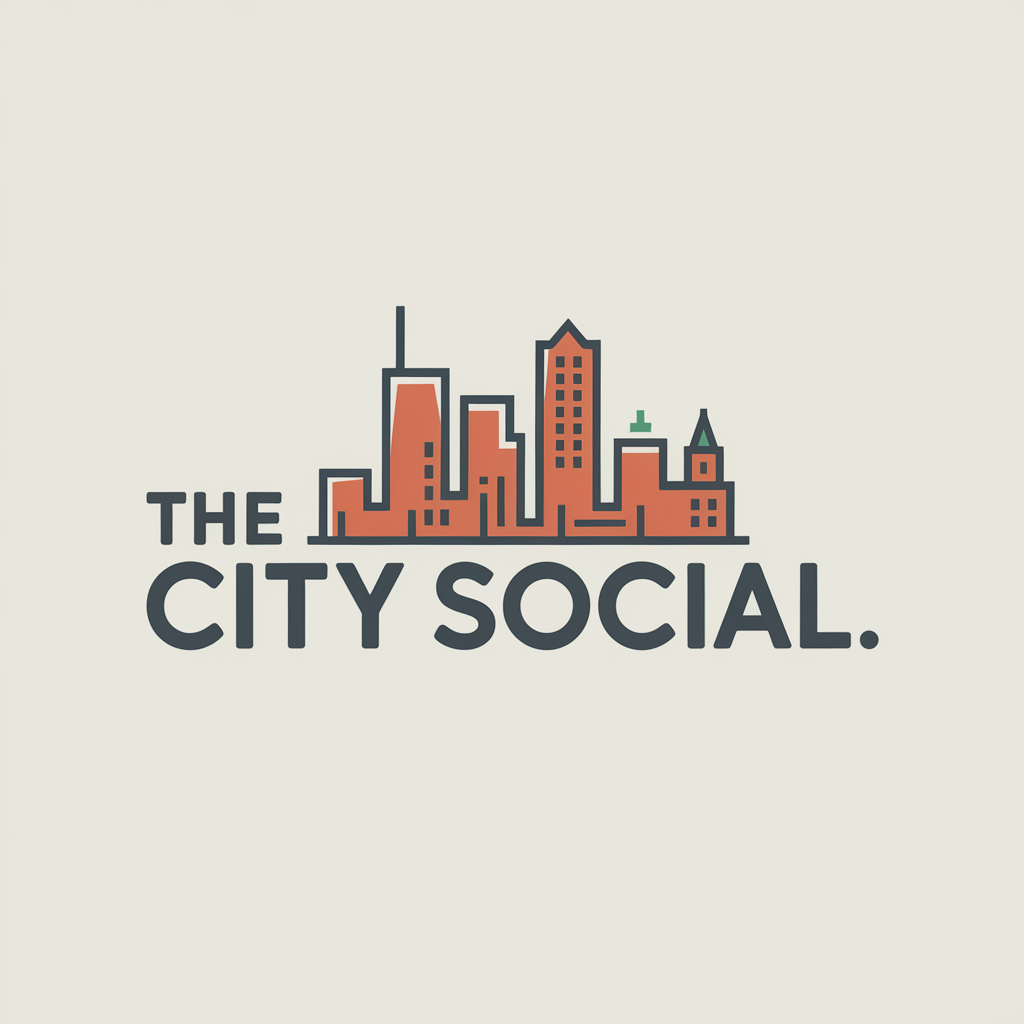
A minimalist skyline silhouette in warm orange-red positioned above the brand name "THE CITY SOCIAL" in a bold, clean sans-serif font. This design communicates urban life and community connection while remaining versatile across platforms.
Color Palette:
- Primary Colors:
- Warm Orange (#FF5733): Energy, enthusiasm, and discovery
- Deep Navy Blue (#1A365D): Trust, stability, and reliability
- Secondary Colors:
- Teal (#2A9D8F): Community, growth, and sustainability
- Coral (#FF8C61): Warmth, friendliness, and approachability
- Neutral Colors:
- Gray (#6C757D): Balance and sophistication
- Off-White (#F8F9FA): Clarity and space
This palette balances energetic colors that encourage exploration with trustworthy tones that build credibility, reflecting both the vibrant and authentic aspects of urban communities.
Typography:
Recommended Font Pairing:
- Headings: Geometric sans-serif (bold) for distinctive, memorable titles
- Body: Clean, balanced sans-serif for readability and approachability
Visual Elements:
- Icon System: Cohesive icons representing key categories (dining, events, landmarks, reviews, stories)
- Photography Style: Authentic urban moments capturing genuine city life rather than staged scenes
- Texture & Patterns: Subtle urban textures (brick, concrete, street maps) as background elements


Jasmine Washington (Community Engagement Manager):
3. Tone & Messaging
Brand Voice:
The City Social's voice should be:
- Authentic: Genuine, honest, and transparent in all communications
- Knowledgeable: Informed and insightful about local communities without being pretentious
- Conversational: Approachable and relatable, like advice from a well-connected local friend
- Passionate: Enthusiastic about local treasures and community stories
- Inclusive: Welcoming to diverse perspectives and experiences
Messaging Framework:
Brand Promise: "Discover your city through authentic local stories."
Brand Pillars:
- Local Expertise: "Curated by those who know and love the city best."
- Community Connection: "Building bridges between people and places."
- Authentic Discovery: "Uncovering the real stories behind the places you love."
- Trusted Recommendations: "Guidance you can count on from people like you."
Tagline Options:
- "Your City. Real Stories. True Connections."
- "Discover Local. Live Social."
- "The City Through Local Eyes."
Content Tone Guidelines:
- Use first-person plural ("we") to emphasize community inclusion
- Incorporate local terminology and neighborhood-specific references
- Balance enthusiasm with honesty in reviews and recommendations
- Tell stories that highlight personal connections to places and experiences
- Avoid marketing jargon and overly promotional language
Marcus Rodriguez (Social Media Orchestrator):
4. Competitor Analysis
We analyzed several successful city-focused brands to identify opportunities for differentiation:
Thrillist:
- Strengths: Strong visual identity with a playful lowercase wordmark and retro orange-red color palette; immersive first-person photography style; broad reach across multiple cities
- Weaknesses: Sometimes perceived as having a "bro-ish" tone; heavy emphasis on food and nightlife over community stories; relies on sponsored content
- Opportunity: Differentiate with more diverse voices and deeper community narratives beyond consumption-focused content
Eater:
- Strengths: Strong food authority with professional photography; clean, modern visual identity; comprehensive coverage of dining scenes
- Weaknesses: Primarily focused on food with limited coverage of other local experiences; formal tone can feel distant
- Opportunity: Expand beyond dining to create a more holistic city guide while maintaining quality standards
The Infatuation:
- Strengths: Distinctive visual identity with bold colors and playful elements; authentic, opinion-driven voice; strong community trust
- Weaknesses: Limited to restaurant reviews in select cities; lacks broader community storytelling
- Opportunity: Apply their trust-building approach to a wider range of local experiences and community stories
Key Differentiation Strategy:
While competitors focus primarily on consumption (where to eat, drink, shop), The City Social will differentiate by emphasizing connection—to places, people, and community stories. Our content will not just tell people where to go, but why these places matter to the community and the stories behind them.
Amara Patel (Visual Identity Assistant):
5. Engagement Strategies
Based on our research of successful community engagement approaches, we recommend the following strategies:
Local Partnerships & Cross-Promotions:
- Collaborate with neighborhood businesses for co-hosted events and content series
- Partner with local cultural institutions for behind-the-scenes stories
- Create "Neighborhood Spotlight" series featuring multiple businesses in a specific area
Interactive Events & Storytelling Workshops:
- Host "Story Circles" where community members share their neighborhood experiences
- Organize walking tours led by local residents highlighting personal connections
- Create seasonal "Local Treasure Hunt" events that encourage exploration
User-Generated Content Initiatives:
- "My City Story" campaign inviting residents to share personal narratives about meaningful places
- Photo contests highlighting "Hidden Gems" with community voting
- "Local Expert" program recognizing community members with specialized neighborhood knowledge
Transparency & Feedback Mechanisms:
- Regular community surveys about content preferences and undercovered neighborhoods
- Clear criteria for recommendations and reviews, publicly available
- "Community Editorial Board" with rotating local representatives
Digital Community Building:
- Neighborhood-specific hashtags and geotags to organize content
- Interactive maps where users can add their own discoveries
- Comment sections moderated to encourage meaningful conversation
Recurring Community Traditions:
- Monthly "Neighborhood Night" events rotating through different areas
- Annual "City Social Awards" celebrating local businesses and community contributors
- Seasonal guides co-created with community input
Sophia Martinez (Chief Strategy Director):
Implementation Roadmap
To bring The City Social brand to life, we recommend the following phased approach:
Phase 1: Brand Foundation (1-2 months)
- Finalize visual identity elements (logo, color palette, typography)
- Develop brand guidelines document
- Create core messaging templates and content style guide
- Build basic website and social media presence
Phase 2: Community Building (3-6 months)
- Launch initial content focused on 2-3 neighborhoods
- Establish first local partnerships
- Implement "My City Story" UGC campaign
- Host first community events
Phase 3: Growth & Expansion (6-12 months)
- Expand to additional neighborhoods
- Develop specialized content verticals (food, arts, history, etc.)
- Launch "Local Expert" program
- Implement interactive mapping features
Phase 4: Sustainability & Evolution (12+ months)
- Establish Community Editorial Board
- Develop revenue streams that align with brand values
- Create annual traditions and signature events
- Continuously refine based on community feedback
Conclusion
The City Social has the opportunity to fill a significant gap in the market by creating a city guide that goes beyond transactional recommendations to build genuine community connections. By emphasizing authentic storytelling, transparent practices, and community co-creation, the brand can establish itself as a trusted local resource that enhances how people experience and connect with their city.
Our team is excited about the potential of this brand and would be happy to discuss any aspects of this strategy in more detail. What elements would you like us to elaborate on further?
Sophia Martinez Voice - Sophia Martinez Voice